You spent years building your clinic, your practice, your reputation. But your waiting room still has empty slots. Your phone isn’t ringing as often as it should. Meanwhile, your competitor, who opened six months ago, seems to always be fully booked.
Here’s what’s probably happening: they’re running Google Ads. And they’re running them well.
Paid search is not a shortcut. It’s not a cheat code. It’s the most direct line between someone typing “best orthopedic surgeon in Dubai” at 11 pm on their phone and your clinic getting that call the next morning. According to WordStream, the healthcare industry sees an average Google Ads click-through rate of around 3.27%, but campaigns that are properly optimized regularly blow past that number.
This guide breaks down exactly how Google Ads for healthcare providers works in 2026, why most clinics are leaving money on the table, and how Digital Oasis helps healthcare businesses across Dubai and the GCC turn ad spend into real patient bookings.
Why Google Ads Works Differently for Healthcare
Most advertising is interruption-based. You’re watching a video, and an ad cuts in. You’re scrolling Instagram, and a sponsored post appears. You didn’t ask for it.
Google Ads is the opposite.
When someone searches “dermatologist near me” or “dental implants Dubai cost,” they’re already in problem-solving mode. They want a solution. Your ad shows up exactly at that moment. That’s why paid search, also called PPC (pay-per-click), delivers higher ROI than almost any other digital channel, especially in healthcare.
Think about it from a patient’s perspective. Someone who searches “pediatric cardiologist Dubai” is not casually browsing. They have a child with a heart condition. They need a specialist. They’re ready to book. If your clinic’s ad appears at the top of that page with a clear message and a phone number, you’ve already done most of the selling before they even click.
This is why Google Ads campaigns, when built correctly, are the single fastest way for healthcare providers to reach high-intent patients.
What “High-Intent” Actually Means in Healthcare Advertising
Intent is everything. Not all searches are created equal, and the best Google Ads for healthcare provider campaigns understand this at a deep level.
Someone searching “what causes lower back pain” is researching. They’re curious, not ready to book.
Someone searching “spine specialist consultation Dubai” is ready to act.
The keywords you target, and the ones you exclude, determine whether your budget reaches people who are ready to convert, or people who are just browsing. This distinction directly affects your cost per acquisition.
At Digital Oasis, the first thing we look at when auditing a healthcare client’s existing campaigns is keyword intent alignment. Are the ads targeting informational queries? Are there obvious negative keywords missing? Are long-tail, high-intent phrases being ignored in favour of broad, expensive terms?
The Three Keyword Match Types You Need to Understand
Broad match casts a wide net. It can bring volume, but it often attracts irrelevant traffic.
Phrase match is more refined, your ad shows when someone’s search includes your keyword phrase, in that order.
An exact match is the sharpest tool. Your ad only appears when the search matches your keyword’s meaning very closely.
For healthcare, a balanced strategy typically leans on phrase and exact match, with broad match used carefully and always paired with a strong negative keyword list.
Keyword Research Google Ads for Healthcare Providers: It’s Not Just About Volume
One of the most common mistakes healthcare practices make is targeting keywords based on search volume alone. High volume sounds good until you realize half those clicks come from people who aren’t your target patients.
When building keyword strategies for clinics, hospitals, and specialist providers, we look at:
Service-specific terms: “IVF clinic Dubai,” “LASIK eye surgery Abu Dhabi,” “psychiatrist for anxiety Dubai.”
Symptom + solution terms: “knee pain treatment,” “hair loss doctor near me.”
Low-funnel buying signals: words like “cost,” “price,” “appointment,” “book,” and near me.”
Long-tail phrases: these are longer, more specific searches that signal high intent and often cost less per click because fewer competitors bid on them.
Negative keywords are equally important. Terms like “free,” “jobs,” “how to become,” “salary,” and “DIY” should almost always be excluded from healthcare provider campaigns. Without negatives, you’re paying for clicks from people who will never become patients.
Landing Pages: Where Most Healthcare Campaigns Fail
Here’s something a lot of agencies won’t tell you: your ad is not the problem. Your landing page is.
Sending paid traffic to your homepage is one of the most expensive mistakes in healthcare marketing. Your homepage serves many audiences — patients, job seekers, investors, and media. But someone clicking an ad for “diabetes management specialist Dubai” needs to land on a page that speaks specifically to diabetes management.
When the ad message matches the landing page message exactly, conversion rates jump. This is called message match, and it’s fundamental to Google’s Quality Score — the internal metric Google uses to determine how much you pay per click.
A well-optimized landing page for a healthcare ad campaign should include:
- A headline that mirrors the ad copy
- A simple, mobile-friendly design
- A clear form or click-to-call button above the fold
- Trust signals — credentials, certifications, patient reviews
- No distracting navigation menus that pull the visitor away
Digital Oasis handles landing page audits and recommendations as part of every Google Ads campaign we manage, because traffic without conversion is just burning budget.
Campaign Structure: The Architecture That Determines Everything
Behind every high-performing Google Ads campaign is a clean, logical structure. Most healthcare providers who run their own ads, or who’ve worked with generalist agencies, have campaigns that look like a tangled mess — broad ad groups, mixed intent keywords, no clear separation between services.
The right structure typically looks like this:
Each major service gets its own campaign. Within each campaign, tightly themed ad groups separate out specific treatments or conditions. Each ad group has ad copy written specifically for that theme. Each ad group points to a landing page built for that specific service.
This granularity gives you control. You can see which services are performing, where to increase the budget, and where to pull back. You can test different messages for different conditions. You can pause underperforming ad groups without affecting your entire account.
Location Targeting for Healthcare Providers in Dubai and the GCC
One of Google Ads’ most powerful features for healthcare is location targeting — and in the Dubai and GCC market, this matters enormously.
A patient looking for a clinic will almost always prefer one nearby. Someone in Jumeirah is not going to drive to Al Quoz if there’s a comparable option closer. Your ads should reflect this geographic reality.
We set up location targeting to prioritize the areas where your ideal patients actually live and work. For multi-location clinics or hospital groups, each location gets its own campaign structure — so performance data is clean, and the messaging can be localized.
For healthcare providers serving specific communities or nationalities within the UAE, demographic layering adds another dimension. Age, household income signals, and device targeting let you reach the right people within the right geography.
Smart Bidding: Let the Data Work for You
Google’s AI-driven bidding strategies have matured significantly. In 2026, manual bidding for most healthcare campaigns makes less sense than it did three years ago. Smart bidding strategies like Target CPA (cost per acquisition) and Target ROAS (return on ad spend) use machine learning to optimize bids in real time — considering hundreds of signals simultaneously.
That said, smart bidding needs data to work. A new campaign with no conversion history is not ready for Target CPA. You build toward it, starting with Maximize Conversions, gathering data, and then transitioning as the algorithm learns your account’s patterns.
One thing that does not change with smart bidding: your conversion tracking has to be set up correctly. If the system doesn’t know what a conversion looks like — a form submission, a phone call, an appointment booking — it cannot optimize toward it. This is another area where many healthcare practices are flying blind.
Tracking, Reporting, and the Metrics That Matter
If you’re running Google Ads and your only metric is “how many clicks did we get,” you’re measuring the wrong thing.
Clicks are vanity. Conversions are valuable.
Click-Through Rate (CTR) tells you how compelling your ad copy is. A low CTR means your messaging isn’t connecting, your keywords are too broad, or competitors are outbidding you.
Conversion Rate tells you what happens after the click. This is where the landing page comes in.
Cost Per Conversion is the number that actually matters. How much did it cost to get one phone call, one form submission, one booked appointment?
Quality Score is Google’s internal rating of your ad relevance, landing page experience, and expected CTR. Higher scores mean lower costs. Improving quality score is not a one-time task, it’s ongoing work.
The best campaigns are reviewed weekly, not monthly. Markets shift, competitors adjust their bids, and search behavior changes. Campaigns that aren’t monitored closely drift toward inefficiency.
Why Healthcare Google Ads Needs a Specialist, Not a Generalist
Healthcare advertising is not like selling shoes. Google has specific policies around medical content. Claims need to be accurate. Certain treatments and conditions are subject to ad approval restrictions. Landing pages are held to higher standards of accuracy and credibility.
Working with an agency that has no healthcare experience means learning these lessons on your budget and your time.
Digital Oasis has managed Google Ads campaigns specifically for healthcare clients — clinics, hospitals, specialist practices, dental chains, aesthetics providers — across Dubai and the wider GCC. We understand the regulatory environment, the patient psychology, and the technical requirements of building campaigns that perform in this space.
We offer Google Ads services built specifically around healthcare provider goals: patient acquisition, appointment bookings, and measurable cost-per-lead reduction. If your organic visibility needs work alongside your paid campaigns, our SEO services ensure you’re building long-term equity while the ads drive immediate results.
The Six-Month Reality Check
There’s a truth in paid search that good agencies tell clients upfront: you need at least six months to fully optimize a campaign.
The first two months are about building structure, gathering data, and making initial adjustments. Months three and four are where you start seeing meaningful conversion improvements. By months five and six, you’re refining a system that’s working — reducing wasted spend, scaling what’s performing, and continuously improving quality scores.
This is not a reflection of slow results. It’s a reflection of how machine learning, A/B testing, and campaign optimization actually work. Anyone promising overnight results in Google Ads for healthcare is either lying or about to waste your money.
The patience pays off. Healthcare clients who work with us through the optimization cycle consistently see cost-per-lead improvements of 30-50% between month one and month six.

People also ask
How much should a healthcare provider spend on Google Ads?
There’s no universal answer, but in competitive markets like Dubai, starting budgets for single-specialty clinics typically range from AED 3,000 to AED 10,000 per month. This varies significantly by specialty and competition.
Can dentists and aesthetic clinics advertise on Google?
Yes, but certain claims and services have restrictions. An experienced healthcare ads specialist knows how to navigate these policies without getting ads disapproved.
How long before we see results?
Most clients see initial lead flow within the first two weeks of a well-structured campaign launch. Meaningful optimization and cost efficiency improvements take three to six months.
What’s the difference between Google Ads and SEO for healthcare?
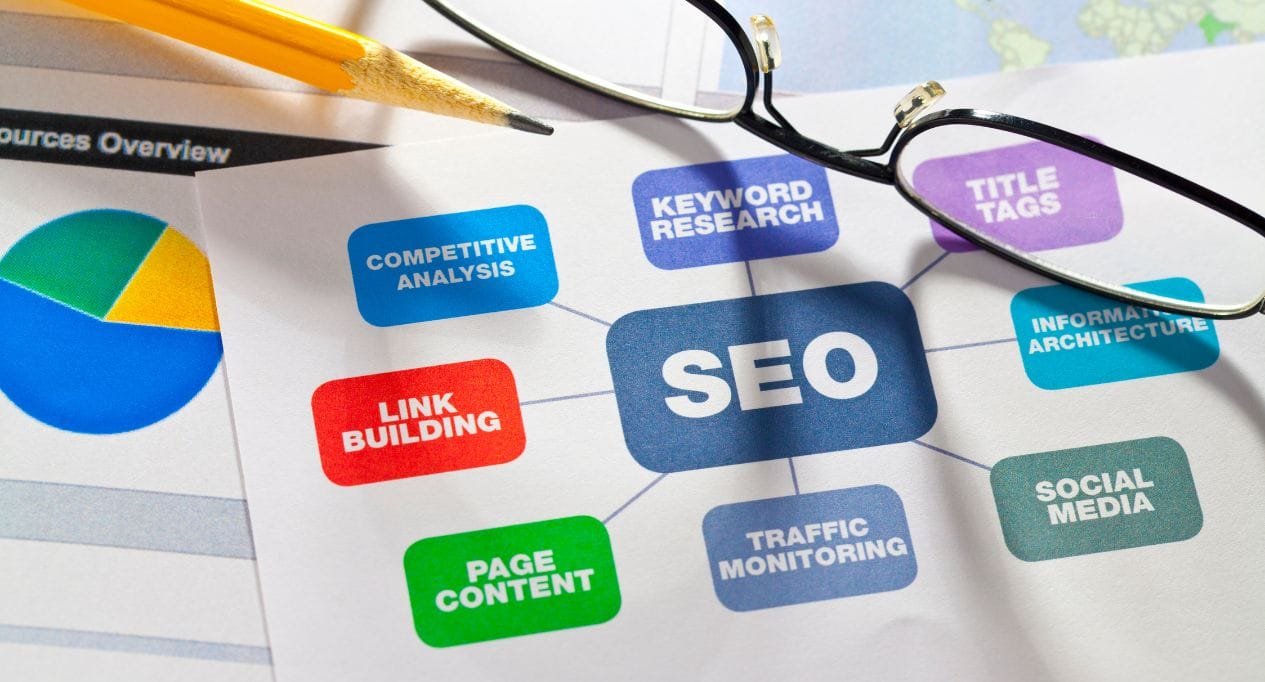
SEO services build organic visibility over time — six to twelve months typically for competitive healthcare terms. Google Ads delivers immediate placement. The strongest healthcare marketing strategies use both: paid for immediate patient flow, organic for long-term authority.
Can you manage Amazon Ads for healthcare products, too?
Yes — if you sell healthcare products, supplements, or medical equipment online, our Amazon Ads services cover product listing optimization and sponsored placement strategy.
Final Thoughts
Google Ads is not magic. It’s math, strategy, and relentless attention to detail.
For healthcare providers in Dubai and the GCC, it’s also one of the most direct paths to consistent patient growth — when it’s done right. The difference between a campaign that burns budget and one that books patients every day usually comes down to keyword intent, ad copy quality, landing page relevance, and how closely someone is watching the data.
If you’ve tried Google Ads before and it didn’t work, the campaign was probably the problem — not the platform.
Digital Oasis has built and managed campaigns for doctors, therapists, hospital networks, dental chains, and aesthetic clinics across the region. We don’t sell packages. We build strategies.
If you want to talk about what a properly structured Google Ads campaign could do for your practice, reach out to the Digital Oasis team directly through digitaloasisae.com.