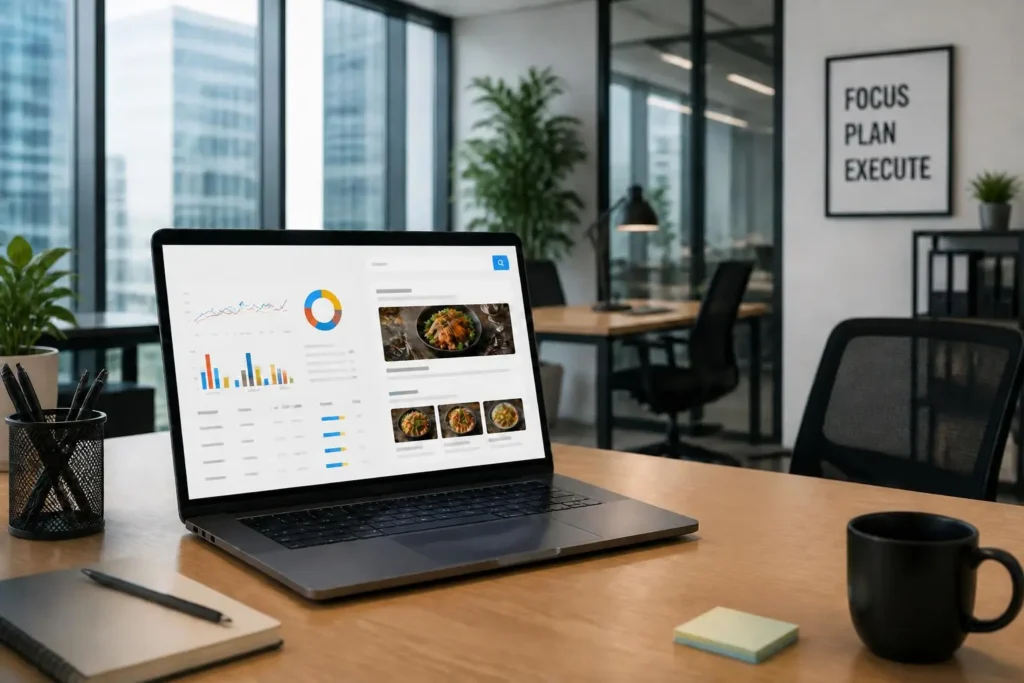
Dubai has more than 13,000 restaurants competing for the same diners, and most of them are relying on the same handful of channels: Instagram posts, a Google Business Profile, and hope. Google Ads sits in a different category entirely. That immediacy is exactly why Google Ads for restaurants in Dubai deserves more than a passing mention in a restaurant’s marketing plan. It doesn’t build brand awareness over months; it puts your restaurant in front of someone the moment they type “best seafood restaurant JBR” or “table for four tonight Downtown Dubai,” searches that convert into a booking within the hour, not the month. That immediacy is exactly why Google Ads deserves more than a passing mention in a restaurant’s marketing plan. This guide by Digital Oasis walks through how to structure, target, and budget a Google Ads campaign tailored to how people in Dubai search for somewhere to eat, including seasonal patterns like Ramadan and Eid that most generic advice overlooks entirely.
Why Google Ads for Restaurants Works Differently Than for Other Businesses
Most purchases involve research and comparison over days or weeks. Dining decisions rarely do. Someone searching “brunch near Dubai Marina” or “shisha lounge Al Barsha open now” has usually already decided to eat out tonight and is choosing where, not whether. That compressed decision window is what makes restaurant Google Ads campaigns convert faster and more predictably than almost any other local service category; the person clicking your ad could be seated at your table within the hour. This is also where Google Ads and Instagram serve genuinely different purposes, not competing ones. Instagram builds the desire to visit, the food photography, the ambience, the reason someone remembers your name. Google Ads captures the moment that desire turns into an actual search. A restaurant running strong Instagram content with no paid search presence is winning the awareness battle and losing the exact moment a hungry, ready-to-book diner is looking. For a broader look at what makes campaigns perform well across industries in this market, see our 10 proven Google Ads strategies in Dubai.
The Google Ads Campaign Types Every Dubai Restaurant Should Run
A well-built Google Ads for restaurants strategy isn’t one campaign; it’s a small set of campaign types working together, each doing a different job.
Search Ads for High-Intent Diners
Search campaigns target the exact phrases people type when they’re close to booking, cuisine-plus-location terms like “Italian restaurant Business Bay” or occasion terms like “anniversary dinner Palm Jumeirah.” These should always be built around specific ad groups rather than one broad “restaurant” campaign, since a search for “vegan brunch Al Barsha” and a search for “steakhouse DIFC” need entirely different ad copy to convert well.
Local Campaigns and Google Maps Integration
A significant share of restaurant searches in Dubai happen with “near me” intent, and Google increasingly surfaces Maps listings and local inventory ahead of standard search results for these queries. Local campaigns, run alongside a fully optimized Google Business Profile, let your restaurant appear with directions, hours, and call buttons directly in that high-intent moment, without requiring someone to click through to a website first.
Performance Max for Broader Reach
Performance Max campaigns extend your restaurant’s visibility across Search, Maps, Display, and YouTube from a single campaign, using Google’s automation to find people likely to convert. For restaurants, this works best as a supplement to tightly controlled Search campaigns, not a replacement. Performance Max is efficient at scale but offers less control over exactly which searches trigger your ad, which matters when protecting a tight daily budget.
Building a Keyword Strategy Around How Dubai Diners Actually Search
Generic keywords like “restaurant Dubai” attract enormous competition and mostly the wrong intent: tourists browsing, researchers comparing, people three weeks away from visiting. The keywords that actually convert combine cuisine, location, and occasion into something specific enough to signal real intent.
| Keyword pattern | Example | Why it converts |
|---|---|---|
| Cuisine + area | “Japanese restaurant Dubai Marina” | Narrow enough to match a specific craving and location |
| Occasion-based | “anniversary dinner Downtown Dubai” | Signals a booking decision already in motion |
| Immediacy | “restaurants open now near me” | Same-day, often same-hour intent |
| Seasonal | “iftar buffet Dubai 2026” | Extremely high volume during Ramadan, low year-round competition |
| Feature-specific | “outdoor seating restaurant Business Bay” | Filters for diners with a specific requirement, reducing wasted clicks |
Building separate, tightly themed ad groups around these patterns, rather than one broad campaign, consistently produces a lower cost per click and a meaningfully higher booking rate, because the ad copy and landing page can match the exact reason someone searched.
Ramadan, Eid, and Seasonal Campaigns — Where Most Dubai Restaurants Leave Money on the Table
Search volume for terms like “iftar buffet Dubai” or “Eid brunch offers” spikes dramatically during specific windows each year, and competition among restaurants for these terms is often lower than the year-round “restaurant Dubai” category, simply because fewer businesses plan far enough ahead to build seasonal campaigns properly. A seasonal campaign built two to three weeks before Ramadan begins, with dedicated ad groups for iftar, suhoor, and Eid brunch, each pointing to a landing page showing that specific menu and price, consistently outperforms a generic, always-on restaurant campaign during these periods. The same logic applies at a smaller scale to Valentine’s Day, National Day, and Dubai Shopping Festival, all of which create short windows of concentrated, high-intent search volume.
Why Your Landing Page Decides Whether a Click Becomes a Booking
This is the single most common, and most expensive, mistake in restaurant Google Ads, and it applies just as much in Dubai as anywhere else: sending every ad click to the homepage. Someone who searched “private dining Business Bay” and clicked an ad for exactly that should land on a page showing your private dining space, capacity, and a direct booking option, not a homepage where they have to hunt for it. Every ad group deserves a landing page that matches what was promised in the ad. A Ramadan campaign should land on an iftar page showing the buffet price and menu. A “brunch near me” ad should land on your brunch page, not a general reservations form. This single change, matching landing pages to ad groups rather than routing everything to one page, is often responsible for a larger jump in conversion rate than any bid or budget adjustment.
How Much Does Google Ads Cost for Restaurants in Dubai?
Restaurant keywords generally see lower cost-per-click than categories like real estate or legal services, but Dubai’s F&B market is dense enough that popular cuisine-and-area terms in busy districts (Downtown, Marina, JBR) still carry meaningful competition. Costs also spike predictably around Ramadan and major holidays as more restaurants compete for the same seasonal search volume. As a general starting point, most independent restaurants and small groups see workable campaign data with a monthly ad spend in the AED 3,000–8,000 range, enough to run several themed ad groups and gather real performance data within a few weeks. Multi-location restaurant groups or brands running heavy seasonal campaigns typically need more to cover Search, Local, and Performance Max simultaneously without any one campaign starving the others of budget. Cost per click matters far less than cost per cover. A campaign generating cheap clicks that never convert into bookings is more expensive than one with a higher CPC and a strong conversion rate, which is exactly why tracking calls, reservation clicks, and directions requests matters more than watching the CPC number alone. If you’re weighing this against other industries or want the fuller cost breakdown, we cover how much Google Ads costs in Dubai in more detail separately
Common Google Ads Mistakes Dubai Restaurants Make
Running one broad campaign for the entire menu, rather than themed ad groups by cuisine, occasion, or season, is the most frequent structural mistake; it blends intent signals together and makes it impossible to tell which searches are actually driving bookings. Ignoring Google Maps and local campaign extensions is a close second. A huge share of “near me” searches never reach a website at all; they convert directly from the Maps listing, and a campaign that isn’t built to capture that moment is leaving visibility on the table. The third common mistake is treating Google Ads as separate from Google Business Profile. The two work together: a strong, review-rich, fully completed profile improves how your ads perform in local results, and an active local campaign increases visibility for the profile itself.
Measuring What Actually Matters — Calls, Directions, and Table Bookings
Clicks and impressions describe reach, not results. For a restaurant, the metrics that actually matter are phone calls generated from the ad, “get directions” clicks, and completed reservation form submissions or booking-platform clicks. Setting up call tracking and conversion tracking before a campaign launches, not weeks into it, is what turns a campaign from a spend line into a measurable source of bookings.
How Digital Oasis Builds Google Ads Campaigns for Dubai Restaurants
We structure restaurant campaigns around the same principle running through this guide: ad groups built by cuisine, occasion, and season, each paired with a landing page that matches exactly what was promised in the ad. That includes Ramadan and holiday campaign planning ahead of the seasonal spike, Google Business Profile alignment for local and Maps visibility, and call/reservation tracking configured from day one so performance is measurable, not guessed at. For restaurants looking to reduce ad dependency over time, we typically pair this with our SEO services so organic visibility builds in parallel with paid campaigns.
Frequently Asked Questions
- How much should a Dubai restaurant budget for Google Ads?
Most independent restaurants see workable results starting around AED 3,000–8,000 per month, though multi-location groups or brands running heavy seasonal campaigns typically need more to cover Search, Local, and Performance Max simultaneously. - Is Google Ads or Instagram better for restaurant marketing in Dubai?
They serve different purposes rather than competing directly; Instagram builds awareness and desire over time, while Google Ads captures the moment that desire turns into an active search for somewhere to eat right now. Most restaurants that grow consistently run both together. - Should restaurants run Google Ads during Ramadan?
Yes, search volume for iftar, suhoor, and Eid-related terms spikes significantly during this period, and campaigns planned two to three weeks with dedicated, menu-matched landing pages consistently outperform generic, always-on campaigns. - Do Google Ads help with Google Maps visibility for restaurants?
Local campaigns can increase visibility in Maps results and “near me” searches specifically, working alongside, not replacing, a fully optimized Google Business Profile. - What’s the biggest mistake restaurants make with Google Ads?
Sending every ad click to the homepage instead of a landing page that matches the specific offer or occasion in the ad; this single fix often improves conversion rates more than any bid adjustment.
Final Thoughts
A full restaurant on a Tuesday night isn’t luck; it’s the result of showing up at the exact moment someone in Dubai decides where to eat, with an offer and landing page built for that specific search. Google Ads, structured around real search behavior rather than one generic campaign, is one of the fastest ways to make that happen consistently rather than hoping walk-ins and referrals fill the gap. For a deeper look at how search intent shapes advertising performance more broadly, Think with Google’s research on consumer search behavior is a useful starting point for restaurant owners building out a paid search strategy for the first time.